
 Појединац, Породица и Друштво
Instagram
St. John Chrysostom: From Antioch to Exile and Enduring Legacy
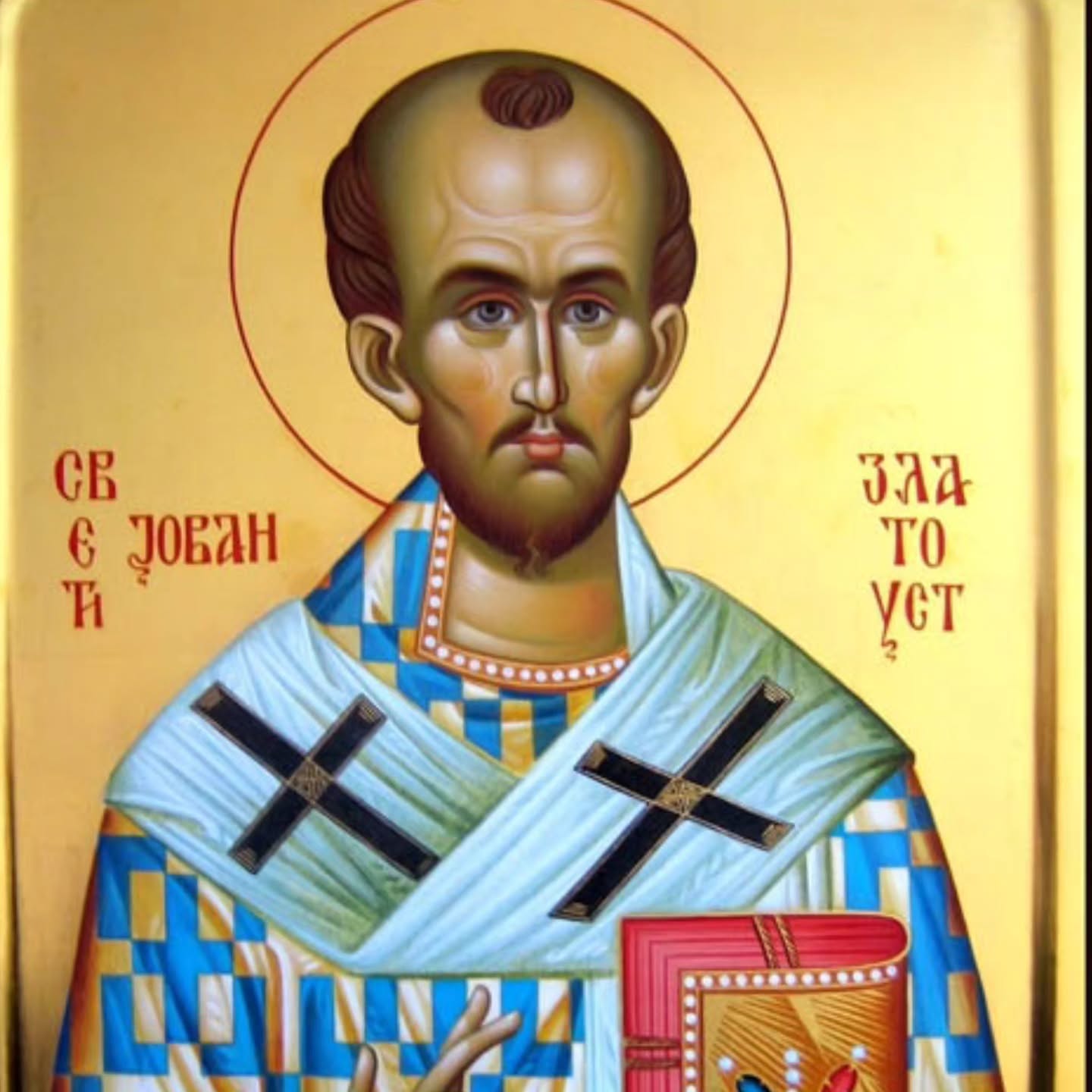
The text presents a biographical account of St. John Chrysostom, Archbishop of Constantinople, likely composed for his feast day. It begins with his birth around 347 in Antioch to Secundus and Anthusa, noting his early education in philosophy and rhetoric under the pagan teacher Libanius, who reportedly said on his deathbed that John would have been his successor had the Christians not taken him.
After his mother's death, John distributed his possessions to the poor and entered monastic life, devoting himself to prayer, fasting, and study of Scripture, especially the Pauline epistles. He returned to Antioch, was ordained deacon and then priest, and gained renown for sermons on repentance, mercy, justice, and love for neighbor, while denouncing injustice, greed, and hypocrisy.
His eloquence earned him the epithet Chrysostom (Golden-mouthed). In 397 or 398 he was elected Patriarch of Constantinople. As archpastor he cared for the poor, regulated church life, and demanded worthy conduct from clergy and laity alike, rebuking even the highest officials for injustice. His uncompromising stance led to persecution, deposition, and exile.
He died in 407 in Comana, exhausted by travel and suffering. The text notes his vast theological legacy: scriptural commentaries, homilies, treatises on the priesthood, and instructions on Christian living. His name is attached to the Divine Liturgy most frequently celebrated in the Orthodox Church.
The account emphasizes his formation in both classical rhetoric and ascetic discipline, the directness of his pastoral preaching, and the cost of his prophetic witness against corruption. It also highlights the enduring liturgical tradition that bears his name, marking his lasting influence on Orthodox worship.
Main points
- Born c. 347 in Antioch to Secundus and Anthusa; educated by Libanius.
- Entered monastic life after mother's death; studied Pauline epistles extensively.
- Ordained deacon and priest in Antioch; renowned for sermons on repentance, justice, and mercy.
- Elected Patriarch of Constantinople in 397/398; cared for poor, reformed clergy, confronted power.
- Exiled and died in 407 at Comana; left commentaries, homilies, and the Divine Liturgy bearing his name.