
 Holy Resurrection
YouTube
Holy Resurrection
YouTube
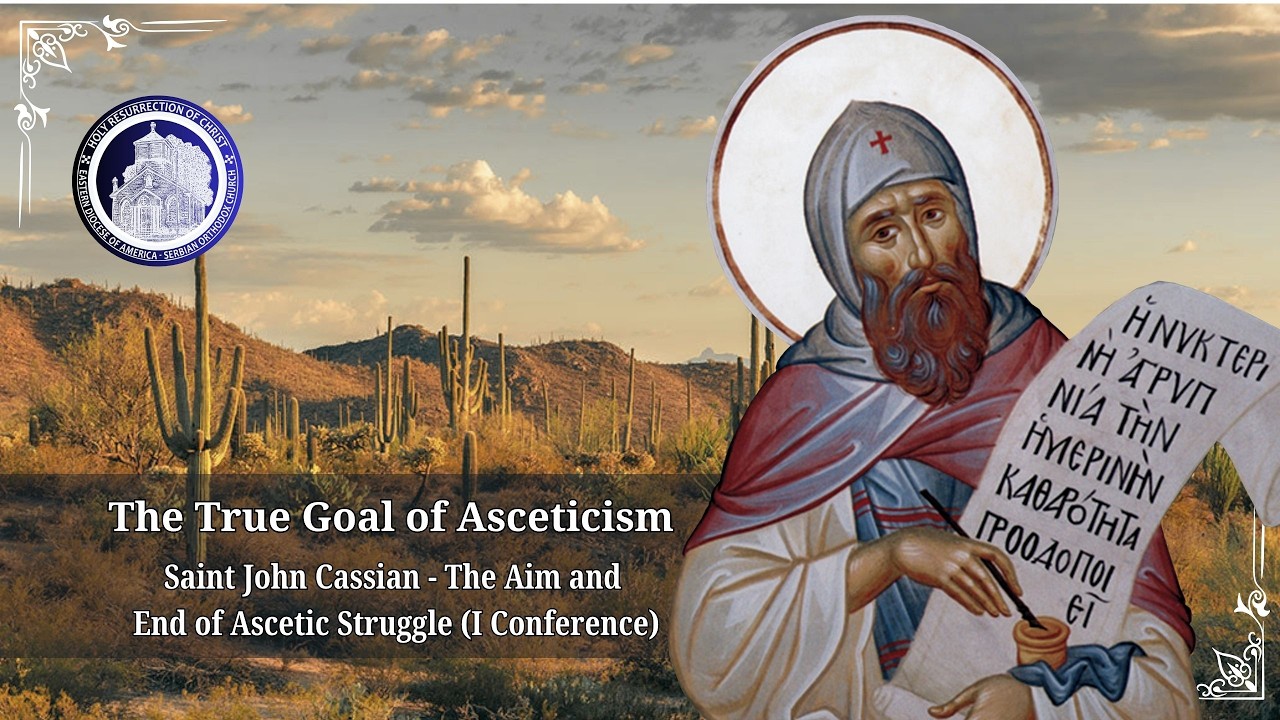
The True Goal of Asceticism: Purity of Heart
 4:34
4:34
What the video says
The video explains that every craft has an aim (scopos) and an end (telos), and the ascetic struggle is no different. Its ultimate end is the Kingdom of God, and its immediate goal is purity of heart, without which the end cannot be reached. St. Paul confirms that the fruit of the Christian life is holiness and the end is eternal life, equating the goal with purity of heart.
All ascetic practices — fasting, vigils, solitude, scripture reading, poverty — are means to preserve purity of heart, not ends in themselves. If purity of heart is kept intact, the omission of a particular discipline does not cause great harm, but fulfilling all disciplines while losing purity yields no profit. Therefore, one must always direct every action toward this goal, lest all labor be in vain.
Key moments
- All sciences and arts have an aim (scopos) and an end (telos); the practitioner endures labor for that end, like a farmer who toils for a harvest.
- Ascetic struggle likewise has an aim and end; for its sake we gladly undertake fasting, vigils, scripture reading, poverty, and the desert life.
- The end is the Kingdom of God; the goal is purity of heart, without which the end is unattainable. We must fix our gaze on this goal and correct any deviation.
- St. Paul teaches that the fruit is holiness and the end is everlasting life, meaning the goal is purity of heart and the end is eternal life.
- Whatever leads to purity of heart must be pursued; whatever draws away must be avoided. For this goal we leave parents, homeland, riches, and worldly comforts.
- Keeping the goal before our eyes directs all actions toward it; otherwise labors are in vain. For purity we embrace the desert, fasts, vigils, labors, poverty, reading, and virtues.
- Fasts, vigils, solitude, and meditation are undertaken for the chief purpose of purity of heart. This principal virtue must not be disturbed; if preserved, omission of a lesser labor is not greatly harmful.
- Ascetic struggles are means, not perfection itself. Fulfilling all disciplines while violating purity of heart brings no profit. Labor is in vain if one rests in the means rather than extending toward the end.
This post presents an outline from Saint John Cassian's First Conference in the Philokalia (Volume II), explaining the purpose and structure of the ascetic struggle. Cassian teaches that every craft has an aim (scopos) and an end (telos); the ascetic life is no different. Its ultimate end is the Kingdom of God, and its immediate, indispensable goal is purity of heart.
Without purity of heart, the end cannot be attained. Saint Paul confirms this, identifying the fruit of the Christian life as holiness and the end as eternal life, thereby equating the goal with purity of heart.
All ascetic practices — fasting, vigils, solitude, scripture reading, poverty, and the desert life — are means to preserve purity of heart, not ends in themselves. Cassian emphasizes that if purity of heart is kept intact, the omission of a particular discipline does not cause great harm. Conversely, fulfilling every external discipline while losing purity of heart yields no spiritual profit.
Therefore, the monk or Christian must constantly direct every action toward this goal, correcting any deviation, lest all labor be in vain. The teaching calls for a reorientation of ascetic effort: the practices serve the heart's purification, and the heart's purity serves the Kingdom.
Main points
- Asceticism has an aim (purity of heart) and an end (the Kingdom of God), just as every craft has a purpose and a final goal.
- Purity of heart is the immediate goal without which the ultimate end cannot be reached; St. Paul links this to holiness and eternal life.
- Fasting, vigils, solitude, reading, and poverty are means to preserve purity of heart, not perfections in themselves.
- If purity of heart is maintained, missing a lesser discipline is not greatly harmful; but keeping all disciplines while losing purity profits nothing.
- Every action must be directed toward purity of heart, otherwise ascetic labor becomes vain.