
 Holy Resurrection
YouTube
Holy Resurrection
YouTube
St. Paisios: Good Thoughts Reveal Goodness Everywhere
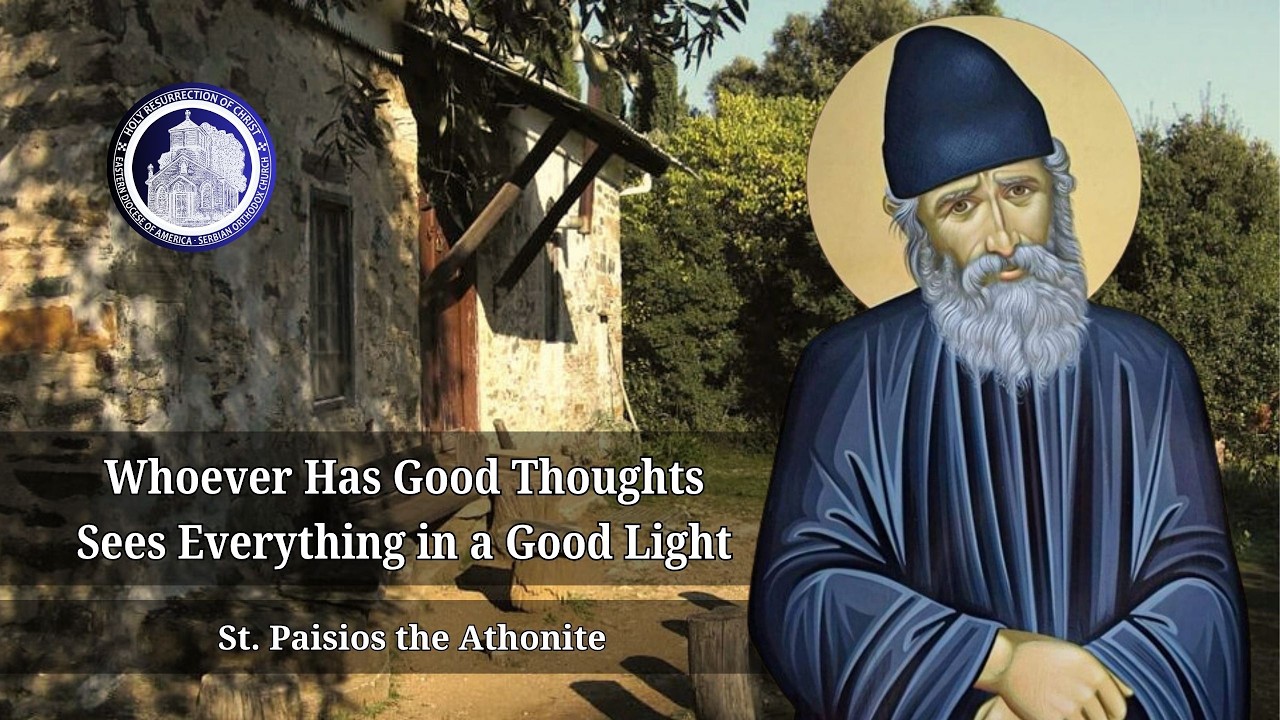 4:10
4:10
What the video says
The speaker uses the analogy of a fly and a bee to illustrate how people's spiritual condition shapes their perception: those like flies focus on filth and evil, while those like bees notice only goodness and beauty. A spiritually damaged person interprets everything negatively, whereas one who cultivates good thoughts sees good everywhere.
He then recounts a personal episode where a high school boy came to his cell seeking his blessing. Despite the elder's deliberate attempts to portray himself as a madman who had gone to buy cigarettes and might be drunk, the boy consistently responded with charitable thoughts, assuming the elder had gone to help someone or that they themselves might be burdening him. The elder was deeply impressed by the boy's unwavering positive mindset.
Key moments
- Introduction of the fly and bee analogy: the fly knows only garbage and filth, while the bee knows only fragrant flowers.
- Explanation that some people resemble flies, seeking out evil in every situation, while others resemble bees, finding good everywhere.
- Spiritually damaged people think in a damaged way, interpreting everything negatively; those who plant good thoughts generate good thoughts regardless of what they see or hear.
- A high school boy knocks on the elder's cell door with a metal hammer, asking to see Father Paisios.
- The elder pretends to be away buying cigarettes and acting crazy; the boy thinks perhaps he went to help someone.
- The elder says he might be drunk and angry when he returns; the boy thinks maybe they are tiring the elder.
- The boy wants to deliver a letter and receive a blessing, continuing to maintain positive thoughts despite the elder's negative descriptions.
- The elder marvels at the boy's ability to consistently form good thoughts, noting it was the first time he had witnessed such a thing.
The post shares an excerpt from St. Paisios the Athonite’s teaching on the warfare of thoughts, emphasizing how our inner disposition shapes our perception of the world. Using the vivid analogy of a fly and a bee, the elder explains that a person resembling a fly seeks out filth and evil in every situation, while one resembling a bee notices only fragrance and beauty.
A spiritually damaged mind interprets everything negatively, whereas a mind cultivated with good thoughts finds good everywhere, regardless of external circumstances.
To illustrate, the elder recounts a personal episode from his time on Mount Athos. A high school boy came to his cell seeking a blessing. St. Paisios deliberately tested the boy by pretending to be a madman who had gone to buy cigarettes and might return drunk and angry. Despite these alarming descriptions, the boy consistently responded with charitable thoughts: perhaps the elder had gone to help someone, or perhaps the visitors were burdening him.
The boy’s unwavering positive mindset deeply impressed the elder, who noted it was the first time he had witnessed such a pure habit of forming good thoughts.
The post also includes a brief appeal for monthly or one-time donations to support the construction of a future parish church, with links to various giving platforms. The spiritual teaching remains the core, inviting readers to examine their own thought patterns and strive for the bee-like vision that transforms perception into a source of grace.
Main points
- The fly and bee analogy illustrates how spiritual condition determines perception.
- Good thoughts enable a person to see good in all circumstances.
- St. Paisios tested a boy’s mindset by feigning negative behavior.
- The boy consistently interpreted the elder’s actions charitably.
- The post includes a fundraising appeal for a parish building project.