WeOrthodox
EN UA
O

Orthodox Christians † 🇬🇷🇨🇾📿

Instagram ↗ 5 discussions

Curated discussions from Orthodox Christians † 🇬🇷🇨🇾📿 (Instagram) with summaries and the most thoughtful opinions.

Knowledge without divine illumination is destruction
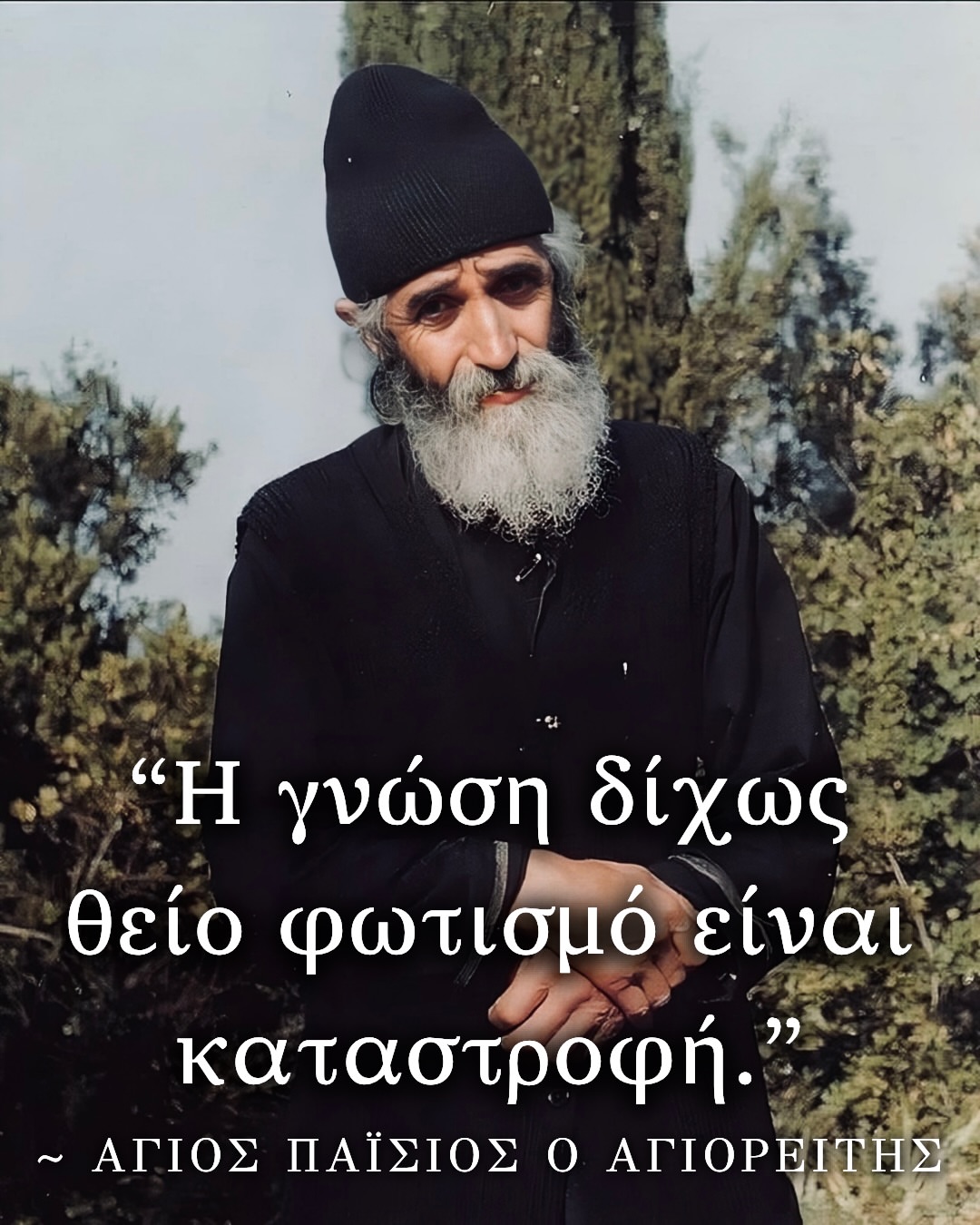
The author, writing in Greek, reflects on the relationship between secular knowledge and spiritual life. Knowledge of oneself, he says, is worth more than all the knowledge of the world, yet evil begins in the mind when it turns only around science and stays far from God. Science helps much, but it also clouds much. People who put inner formation, the formation of the soul, first and use external education for that inner purpose are quickly…

The author, writing in Greek, reflects on the relationship between secular knowledge and spiritual life. Knowledge of oneself, he says, is worth more than all the knowledge of the world, yet evil begins in the mind when it turns only around science and stays far from God. Science helps much, but it also clouds much. People who put inner formation, the formation of the soul, first and use external education for that inner purpose are quickly transformed spiritually.

If they also practice spiritually, they help many people, drawing them out of the anxiety of damnation and toward heavenly joy. Such people of God may have fewer diplomas, but they help more because they have much Grace rather than many papers. Intellectuals who have themselves inside them instead of God cannot grasp this, because they carry barren worldly knowledge with its worldly spiritual sickness, and the Holy Spirit is absent.

The Holy Spirit, he writes, does not come down by machines; He comes down on His own when He finds the spiritual prerequisites in a person. Knowledge and education are good things, but if they are not sanctified they are lost things. God gave man the mind to find his Creator. Europeans, he says, wore out the mind, fell into confusion, and head toward the cliff because they removed God from their lives.

Some use their minds for good and invent good things, others for destruction. Worldly logic has no place in the spiritual life, because miracles cannot be explained by logic: you simply live them and believe them. Angels and saints enter through the window, you see them, speak with them, and they leave; if you try to examine this with logic, it does not work. The text notes it continues in the comments.

  • Knowledge without divine illumination is called destruction; self-knowledge outweighs all the world's knowledge.
  • Science helps much but also clouds much; evil begins when the mind turns only around science and away from God.
  • People with fewer diplomas but much Grace help others more than those with many papers.
  • The Holy Spirit does not come down by machines; He comes when He finds the spiritual prerequisites in a person.
  • Miracles cannot be explained by logic; angels and saints are seen and spoken with, and logic cannot examine this.
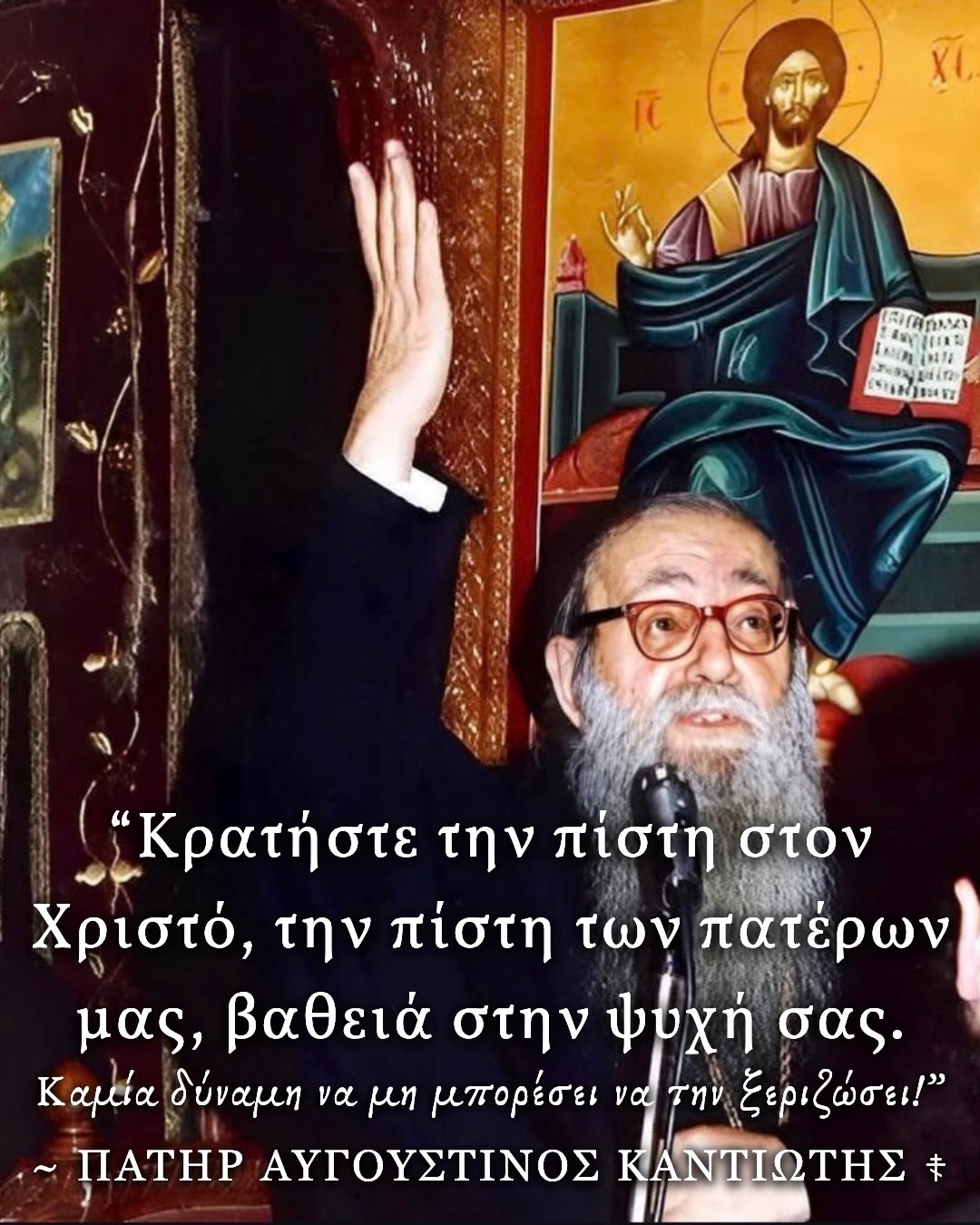
Bishop Augoustinos Kantiotes: Keep the Faith of Our Fathers Deep in Your Soul

A short exhortation from the late Bishop Augoustinos Kantiotes of Florina, Prespes and Eordaia, written for the times he calls cursed, when the devil has used all his power to uproot faith from human hearts. He warns readers to be very watchful, because salvation requires faith: faith in God, faith in Christ, and faith in what the Church teaches. He urges believers to hold the faith of Christ, the faith of their fathers, deep in their souls, so…

A short exhortation from the late Bishop Augoustinos Kantiotes of Florina, Prespes and Eordaia, written for the times he calls cursed, when the devil has used all his power to uproot faith from human hearts. He warns readers to be very watchful, because salvation requires faith: faith in God, faith in Christ, and faith in what the Church teaches.

He urges believers to hold the faith of Christ, the faith of their fathers, deep in their souls, so that no force can tear it out, and to listen to the Church. He then turns to the end of life, contrasting two deaths from the Gospel. The first is the end of Herod, who was rejected by the almighty God.

The second is the end of the thief on the cross, who prayed: 'Remember me, Lord, when You come in Your kingdom' (Luke 23:42). Kantiotes asks that our own end be like the thief's, marked by that same prayer, rather than like Herod's. The text closes with his name and title, remembered as Bishop of Florina, Prespes and Eordaia.

  • Bishop Augoustinos Kantiotes warns that the devil works to uproot faith from human hearts in the present age.
  • Salvation requires faith in God, in Christ, and in the teaching of the Church.
  • He urges readers to keep the faith of their fathers deep in their souls so no force can remove it, and to listen to the Church.
  • He contrasts Herod's end, rejected by God, with the thief on the cross, who prayed 'Remember me, Lord, when You come in Your kingdom' (Luke 23:42).
  • He asks that our own end of life be like the thief's.
Read more

"Do not fear" appears 365 times in Scripture: one for every day

The post gathers Scripture verses and words of Saint Eumenios Saridakis on the command "Do not fear." It opens with Matthew 28:20, where Christ promises to be with us all the days until the end of the age, and links this to the name Emmanuel, which means "God with us." The author notes that if we count which command appears most often in the Bible, it is "Do not fear," written 365 times, one for each day. The suggested practice is to begin the…

The post gathers Scripture verses and words of Saint Eumenios Saridakis on the command "Do not fear." It opens with Matthew 28:20, where Christ promises to be with us all the days until the end of the age, and links this to the name Emmanuel, which means "God with us." The author notes that if we count which command appears most often in the Bible, it is "Do not fear," written 365 times, one for each day.

The suggested practice is to begin the day with prayer, entrust it to the Creator, and say: I endured today; tomorrow belongs to God. A passage in the voice of Christ tells the believer who calls God Father, Creator, Governor and God to invest only in His presence and to live without insecurity and anxiety, keeping the basic command: "Believe and do not fear."

A prayer follows, asking Christ to make the soul love Him more each day, never be filled with His love, be unable to live without it, and never see that love end. The closing words of Saint Eumenios Saridakis call us to love God so much that we never tire of loving Him and fear nothing. The post ends with Luke 12:32, "Fear not, little flock, for it is your Father's good pleasure to give you the kingdom," given in Greek with a modern Greek explanation that the little flock is small compared to the multitude of the unfaithful, yet the Father was pleased to give them the kingdom of heaven.

It closes with the doxology, Glory to the Father and the Son and the Holy Spirit, now and always and unto the ages of ages. Amen.

  • Matthew 28:20: Christ is with us all the days until the end of the age; His name Emmanuel means "God with us."
  • The command "Do not fear" appears 365 times in Scripture, one for each day of the year.
  • Saint Eumenios Saridakis: start the day with prayer, entrust it to God, and say "I endured today; tomorrow belongs to God."
  • Christ asks those who call Him Father to invest only in His presence and to live without anxiety, keeping the command "Believe and do not fear."
  • The post ends with Luke 12:32, "Fear not, little flock," and the doxology to the Holy Trinity.
Read more

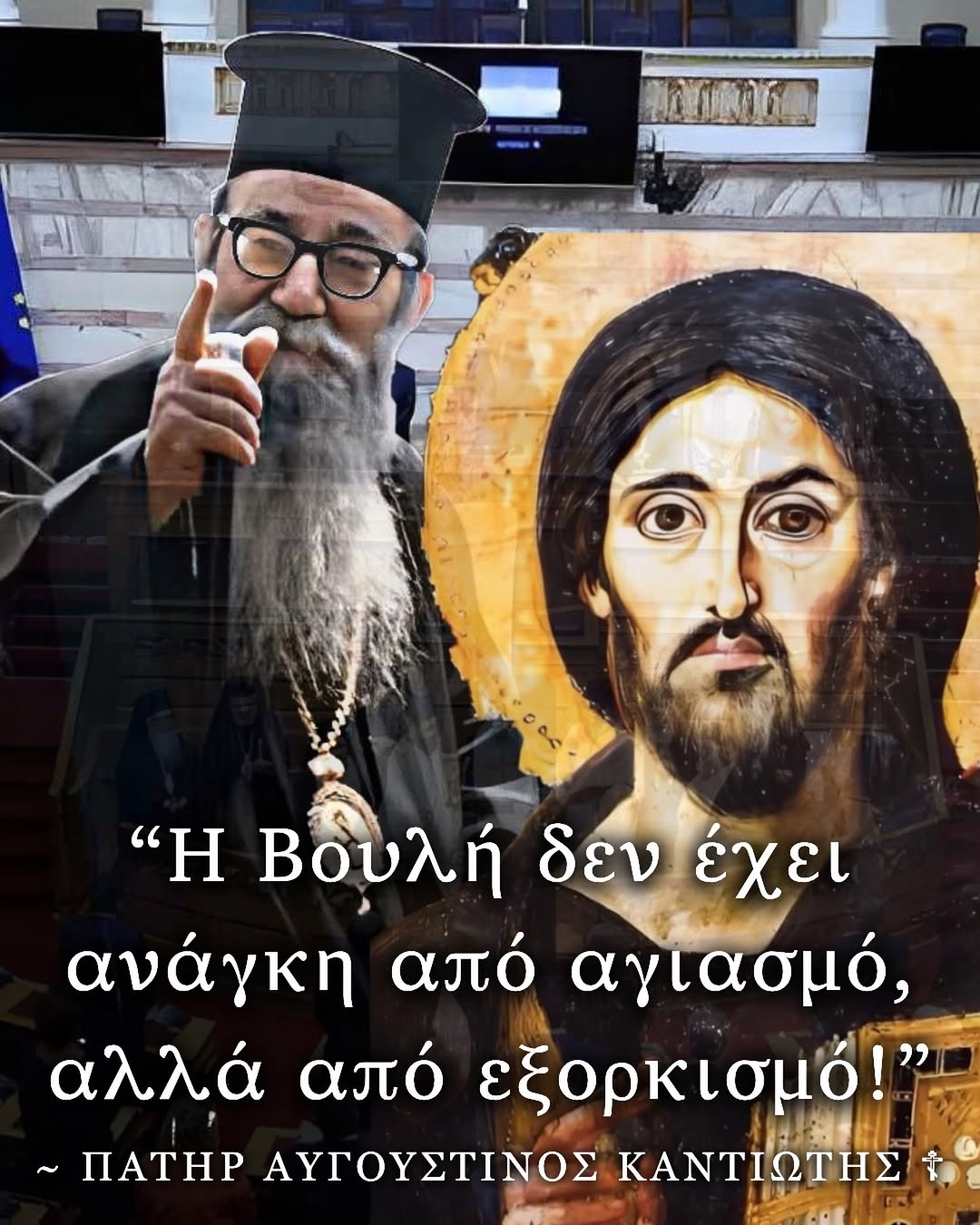
Blessing water for Parliament? Bishop Augoustinos says it needs an exorcism instead

Bishop Augoustinos Kantiotes of Florina recalls that when he served on a synodal committee, he was asked to perform a blessing of waters (agiasmos) in the Hellenic Parliament. He answered that he would come, but that he would also bring Father Porphyrios. He describes what he would have said to the Parliament: asking it what its name is, and answering that it is a legion of demons, that all the devils have gathered inside it, the demons of…

Bishop Augoustinos Kantiotes of Florina recalls that when he served on a synodal committee, he was asked to perform a blessing of waters (agiasmos) in the Hellenic Parliament. He answered that he would come, but that he would also bring Father Porphyrios. He describes what he would have said to the Parliament: asking it what its name is, and answering that it is a legion of demons, that all the devils have gathered inside it, the demons of adultery, of prostitution, of atheism, and of unbelief.

Because of this, he says, the Parliament does not need a blessing of waters but an exorcism. Since he calls himself a sinful man, he says he would call on Father Porphyrios to come, raise the Cross, and exorcise them all. He calls this the madness of being a Christian: a time is coming, he says, when the world will call Christians mad, and then they will be happy to be called mad.

He states that the madness of the Cross will save the world. He repeats that the Hellenic Parliament does not need a blessing of waters because it mocks the things of God, and that he would preach to its members that they need an exorcism, with Father Porphyrios raising the Cross and exorcising the demons that have nested in the heart of Greece.

The quote is attributed to the late Bishop of Florina, Father Augoustinos Kantiotes. The post presents the passage as a word of counsel and rebuke addressed to Greek public life, framed around the contrast between a ceremonial blessing and the casting out of demons, and around the willingness of Christians to be counted as fools for the Cross.

  • Bishop Augoustinos Kantiotes of Florina recalls being asked, while synodal, to perform a blessing of waters in the Hellenic Parliament.
  • He says he would answer that the Parliament is a legion of demons: of adultery, prostitution, atheism, and unbelief.
  • He concludes the Parliament needs an exorcism, not a blessing of waters, because it mocks the things of God.
  • He says he would call the sinful man himself unfit for the task and would ask Father Porphyrios to raise the Cross and exorcise them all.
  • He says a time is coming when the world will call Christians mad, and that the madness of the Cross will save the world.
Read more