WeOrthodox
EN UA

Mount Athos Legacy

Facebook ↗ 3 discussions

Αυθεντικά χειροποίητα προϊόντα από μοναχούς του Αγίου Όρους Original handmade products by monks of Mount Athos in Greece

Mount Athos Legacy Facebook

Unbelief Comes from Pride: St. Silouan the Athonite on Knowing God

The post quotes St. Silouan the Athonite on the origin of unbelief and the way God is known. According to the quote, unbelief comes from pride. The proud person claims he will know everything through his mind and through science, but the knowledge of God remains unreachable for him, because God is known only through the revelation of the Holy Spirit. The Lord reveals Himself to humble souls. To them He shows His works, which are incomprehensible…

The post quotes St. Silouan the Athonite on the origin of unbelief and the way God is known. According to the quote, unbelief comes from pride. The proud person claims he will know everything through his mind and through science, but the knowledge of God remains unreachable for him, because God is known only through the revelation of the Holy Spirit.

The Lord reveals Himself to humble souls. To them He shows His works, which are incomprehensible to our mind. With our natural mind we can know only earthly things, and even these partially, while God and all heavenly things are known through the Holy Spirit. The post presents this teaching as a single short passage attributed to the saint, without further commentary or discussion.

It sets pride against humility, and natural human knowledge against knowledge given by the Holy Spirit, and names humility as the condition in which God reveals Himself.

  • St. Silouan the Athonite teaches that unbelief comes from pride.
  • The proud person claims he will know everything by his mind and by science, but the knowledge of God stays unreachable for him.
  • God is known only through the revelation of the Holy Spirit.
  • The Lord reveals Himself to humble souls and shows them His works, which the mind cannot grasp.
  • The natural mind knows only earthly things, and partially, while God and all heavenly things are known through the Holy Spirit.

Mount Athos Legacy Facebook

Pride Blocks the Knowledge of God: St. Silouan on Faith and Revelation

A quotation from St. Silouan the Athonite on the origin of unbelief. He says unbelief comes from pride. The proud person claims he will know everything through his mind and through science, but the knowledge of God remains unreachable for him, because God is known only through the revelation of the Holy Spirit. The Lord reveals Himself to humble souls. To them He shows His works, which are beyond the grasp of our mind. With our natural mind we…

A quotation from St. Silouan the Athonite on the origin of unbelief. He says unbelief comes from pride. The proud person claims he will know everything through his mind and through science, but the knowledge of God remains unreachable for him, because God is known only through the revelation of the Holy Spirit. The Lord reveals Himself to humble souls. To them He shows His works, which are beyond the grasp of our mind.

With our natural mind we can know only earthly things, and even those partially, while God and all heavenly things are known through the Holy Spirit. The post presents this teaching as a single attributed quotation, with no further commentary or discussion attached. It sets two ways of knowing side by side: the natural mind, which reaches earthly things in part, and the Holy Spirit, through whom God and the things of heaven are known.

It also names pride as the obstacle and humility as the condition in which the Lord reveals Himself and shows His works, which the mind cannot contain.

  • St. Silouan the Athonite says unbelief comes from pride.
  • The proud person claims he will know everything by his mind and by science, but the knowledge of God stays unreachable for him.
  • God is known only through the revelation of the Holy Spirit.
  • The Lord reveals Himself to humble souls and shows them His works, which our mind cannot grasp.
  • The natural mind knows only earthly things, and partially, while God and all heavenly things are known through the Holy Spirit.
Mount Athos Legacy Facebook

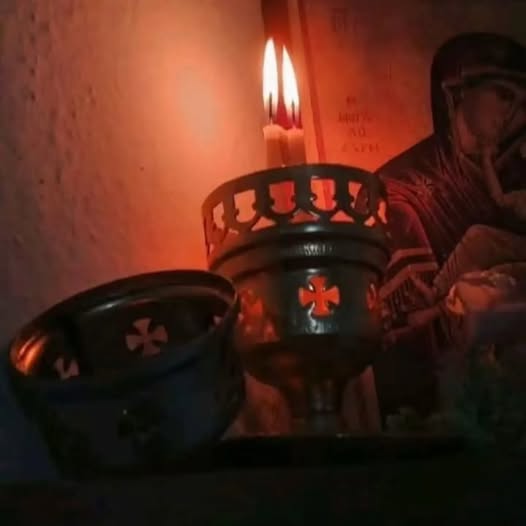
The Burning Vigil Lamp Cries 'Have Mercy' to God for the One Who Lit It

Elder Ephraim of the Skete of St Andrew teaches that a lit vigil lamp is itself a prayer. For as long as the lamp burns, it cries 'Eleison, Eleison, Eleison', that is, 'Have mercy', to God for the person who lit it. The elder says the devil knows this, and so he plants logismoi, tempting thoughts, in people's minds, suggesting that keeping a lit lamp poses a danger of fire. The elder also speaks about the oil. He says we should always put the…

Elder Ephraim of the Skete of St Andrew teaches that a lit vigil lamp is itself a prayer. For as long as the lamp burns, it cries 'Eleison, Eleison, Eleison', that is, 'Have mercy', to God for the person who lit it. The elder says the devil knows this, and so he plants logismoi, tempting thoughts, in people's minds, suggesting that keeping a lit lamp poses a danger of fire.

The elder also speaks about the oil. He says we should always put the best oil in the vigil lamp. Then he adds a humble qualification of his own: he would say, humbly, that a person may put in whatever oil he can afford. What matters is that he offers the best oil of his heart together with whatever oil he can manage at the time, so that he keeps at least one vigil lamp burning.

Such a lamp, he writes, is 'presves eleous', an intercessor of mercy, toward Heaven. The saying ends with the signature of the elder himself, Gerontas Ephraim of the Skete of St Andrew. The whole text rests on two points: the burning lamp prays for the one who lights it, and the enemy attacks this practice with thoughts of danger in order to stop it.

The elder's answer to the temptation is to keep the lamp lit, with the best oil one has, and above all with the oil of the heart.

  • A lit vigil lamp cries 'Eleison' ('Have mercy') to God for as long as it burns, for the person who lit it.
  • The devil knows this and plants thoughts that a lit lamp is a fire hazard, to make people stop keeping one.
  • The best oil should always be put in the vigil lamp.
  • The elder humbly adds that one may use whatever oil he can afford, as long as he offers the best oil of his heart with it.
  • Keeping even one lamp burning makes it an intercessor of mercy toward Heaven.
Read more